SQL Server End of Life: Navigating Your Next Steps
Discover the essential next steps for navigating SQL Server end-of-life transition. Learn how to keep your database environment secure.

Discover the essential next steps for navigating SQL Server end-of-life transition. Learn how to keep your database environment secure.
Table of Content
Microsoft’s SQL Server 2014, a cornerstone for many database management systems, is approaching its end of life on July 9, 2024. This pivotal moment marks the end of extended support for this version, signaling a crucial juncture for organizations relying on this technology. Understanding SQL Server 2014’s lifecycle and planning for what comes next is essential for partners.
Understanding SQL Server Lifecycle: Mainstream and Extended Support
SQL Server, like many Microsoft products, follows a lifecycle policy that includes a minimum of 10 years of support. This period is divided into two phases:
When a product reaches the end of its lifecycle, it no longer receives servicing or support, a phase often referred to as end of life.
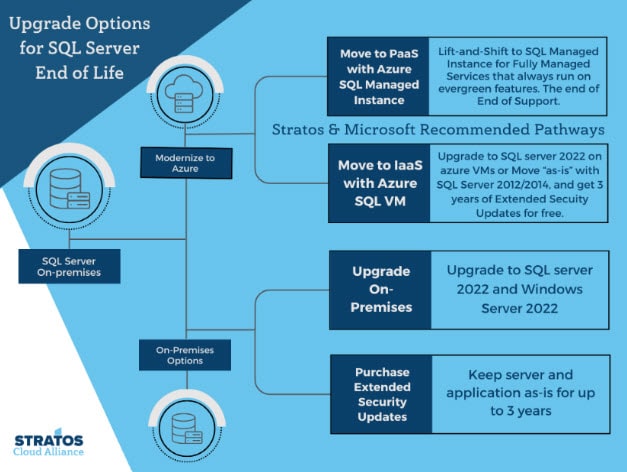
As SQL Server 2014 reaches its end of life, partners should be aware of several paths to help support clients:
The availability of Extended Security Updates depends on the SQL Server’s hosting environment:
Delaying the transition from SQL Server 2014 can lead to increased risks and costs. A well-planned and executed migration or upgrade is vital for minimizing downtime and ensuring continuous, secure operations. Microsoft urges partners to help their clients to begin planning their upgrade to avoid potential crises.
As SQL Server 2014 reaches its end of life, it’s important to have a plan in place. The path ahead, whether it involves migrating to Azure, upgrading to SQL Server 2022, or securing extended support, requires careful strategizing and execution.
In these times of change, having a trusted partner to guide you through the process is invaluable. Book a consultation with Stratos Cloud for expert assistance in navigating your clients SQL Server transition.